
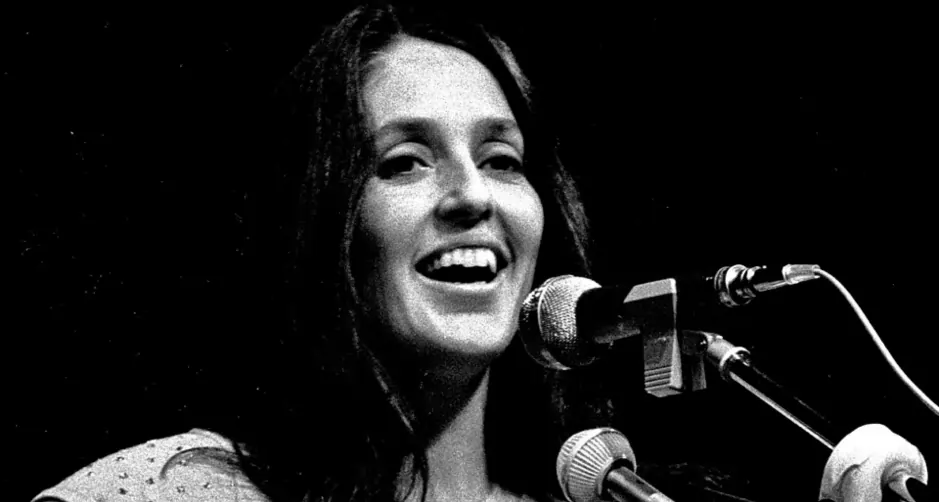
Yes. She wrote it about Bob Dylan. He called her from a phone booth in the Midwest in late 1974, read her a song he’d just finished, and somewhere in that call she found the thing she’d been circling for a decade.
Diamonds and Rust is a song about an unexpected call from an old lover that pulls the narrator back ten years in an instant, through memory that arrives carrying equal parts beauty and damage, and never quite settles into either grief or gratitude.
A verse-by-verse reading of what the lyrics are doing is in the full Diamonds and Rust meaning piece (opens in new tab). But the song’s biography, who wrote it and why, and what it has meant to the two people at its centre, is its own separate story, and a stranger one.
They met in Greenwich Village around 1961. The moment that defined the early relationship came at Newport in July 1963, when Baez walked an unknown Dylan onstage mid-set and introduced him to her audience. She had the crowd. He had the songs. She stood beside him at the microphone while they sang together, and her listeners, who had come specifically to see her, watched and listened. That was the vouching: not a quote in a magazine or a word put in to a promoter, but her own stage and her own audience, given over in front of everyone.
They performed together at the March on Washington (opens in new tab) that August, standing close to King as he delivered his speech. By the end of 1963 Dylan had become a national name, in part because Baez had pointed at him and said: this one.
By 1965 he’d stopped needing any of that. She went with him to England that year. You can see her in Don’t Look Back (opens in new tab), Pennebaker’s tour film, present throughout, never performing. She made the trip and watched from the wings the entire time. What the film doesn’t quite capture is what that cost her. She hadn’t gone to England for her career. She’d gone because she expected to share the stage, the way she had shared hers with him two years earlier. Night after night, no invitation came.
In her own account, she didn’t want the professional reciprocation. She wanted the emotional acknowledgement. Dylan gave her neither, and she eventually left. He later described that period as chaotic and expressed regret that she got caught in the middle of it. The explanation is not wrong. It is also not quite enough.
They split after the UK tour. Dylan married Sara Lownds later that year. Baez eventually married David Harris, an anti-war activist who was imprisoned for draft resistance, and had a son. She went on making music and going to marches. Dylan went electric, had a motorcycle accident, went quiet for a while, then came back with a different kind of writing. The decade between 1965 and 1974 contains multitudes for both of them, and almost no contact between the two.
Get more from Lucy Loves Me
Beauty finds, film and TV picks and the trends worth your time, every week.
No spam. Unsubscribe any time.Then the phone rang.
Dylan rang in late 1974. He read her the lyrics to Lily, Rosemary and the Jack of Hearts down the line, a song he’d recently written, calling from a phone booth like it was the most natural thing in the world. Blood on the Tracks (opens in new tab) was a matter of months from its January 1975 release. He was in the mood for old connections. Baez had already started writing a song before the call arrived, but the call changed what it was about. The opening image is a phone held in her hand, his voice coming through it. She calls him a ghost before she says anything else. He has “burst on the scene already a legend, the unwashed phenomenon, the original vagabond.” She wrote it in November 1974. It was released the following April.
By autumn 1975 Dylan had put together the Rolling Thunder Revue (opens in new tab), a loosely organised run of smaller East Coast shows with a rotating cast of musicians, poets, and people he’d collected across his career. Baez was among them. On the first day of rehearsals he asked if she was going to sing that song about robin’s eggs and diamonds. She told him she had written it for her ex-husband David Harris while he was in prison. Dylan seemed surprised. “For your husband?” he said. She kept the story straight.
She had written it about Dylan. Lines like “the unwashed phenomenon, the original vagabond” are not about a man called David Harris. But standing in that rehearsal room, a decade of feeling sitting just below the surface, she handed him a cover story almost automatically, as though she’d offered it before she’d even decided to.
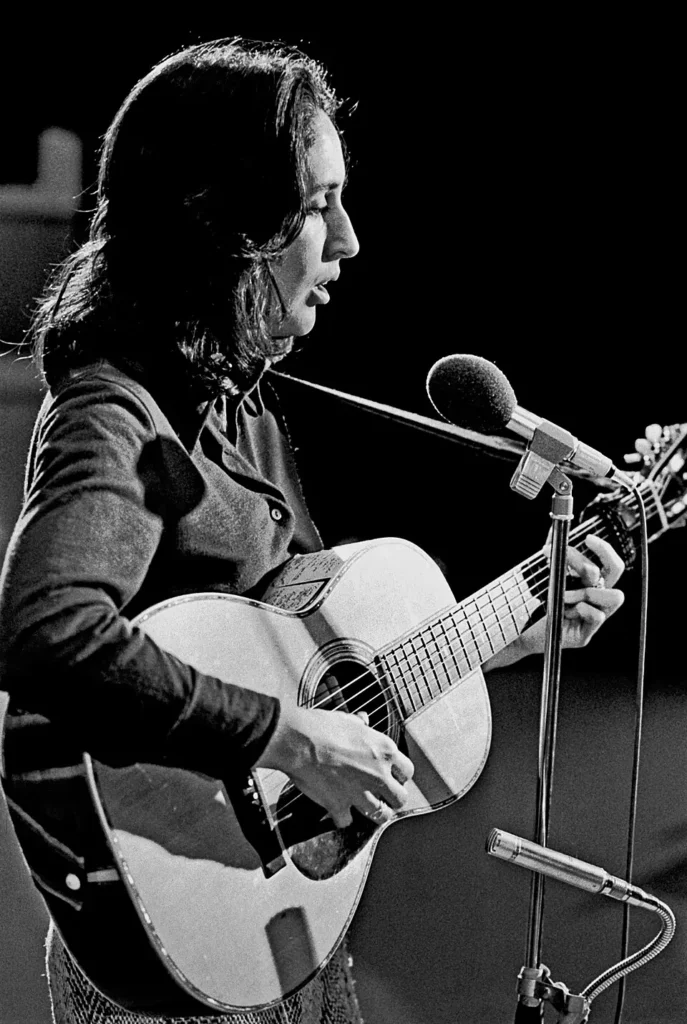
In her 1987 memoir And a Voice to Sing With, Baez writes about her years with Dylan using phrases lifted directly from the lyrics. The admission is not subtle. Dylan spoke about the song on camera in the 2009 documentary Joan Baez: How Sweet the Sound: “I love that song Diamonds and Rust. I mean, to be included in something that Joan had written, whew, I mean, to this day it still impresses me.”
That quote gets repeated so often it has almost lost its edge. Read it again. He says included. Not remembered. Not held to account. Included. As though Diamonds and Rust is something he got to attend rather than something he caused. The documentary premiered at the Toronto International Film Festival in 2009. Dylan agreed to be interviewed for it, itself surprising for a man of his legendarily guarded habits, and used the occasion to say publicly, for the first time, that he regretted the way things ended between them. “I feel very bad about it. I was sorry to see our relationship end.” Forty-four years after the UK tour. Direct language, when he chose to use it.
Then there is what the song has done beyond the two of them. Judas Priest (opens in new tab) covered it on their 1977 album Sin After Sin (opens in new tab), performed it live throughout the following decades, and it remains part of their setlist to this day: a song about a woman’s complicated grief over a folk singer, played by a heavy metal band in leather and studs, to crowds who had no particular connection to Newport 1963 or the Rolling Thunder Revue. Baez’s reaction when she first heard it: “I love that! I was so stunned. I thought it was wonderful.”
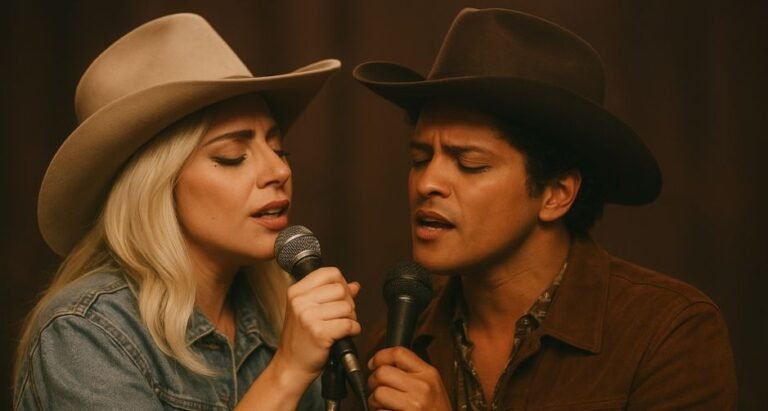
Whatever she put into the song had already escaped its own origins, extending past the specific man and the specific decade she was writing about. She has performed it herself well over 200 times in concert. After her farewell tour concluded, she performed it as a duet with Lana Del Rey at a surprise appearance in Berkeley in October 2019, a moment that felt less like nostalgia and more like evidence that the song keeps finding its way into new rooms.
And then there is what Baez herself has made of it. In the 2023 documentary Joan Baez: I Am a Noise (opens in new tab), she is frank about Dylan in a way she hadn’t been on record before: that he broke her heart, that the relationship was demoralising at times, that she no longer speaks to him. But the filmmakers also relay something else.
One day, painting his portrait, she put on his music and cried for a long time. Then the resentment lifted. “I’m happy that I was there when I was there.” A portrait of a stern-looking latter-day Dylan hangs on the wall of her home. She made her peace by hand, with a brush, looking at his face, and then the feeling was gone. Diamonds for what was real and worth something. Rust for everything after.
Baez took a decade of accumulated feeling about a man who rarely looked back and turned it into one of the finest songs ever written about him, without using his name once. Dylan spent a career writing about the women in his life. Baez wrote one song back, and it remains one of the few portraits of him that feels impossible for him to control. He can call himself included. He can apologise at a film festival. He can hang on her wall. The song doesn’t move.