
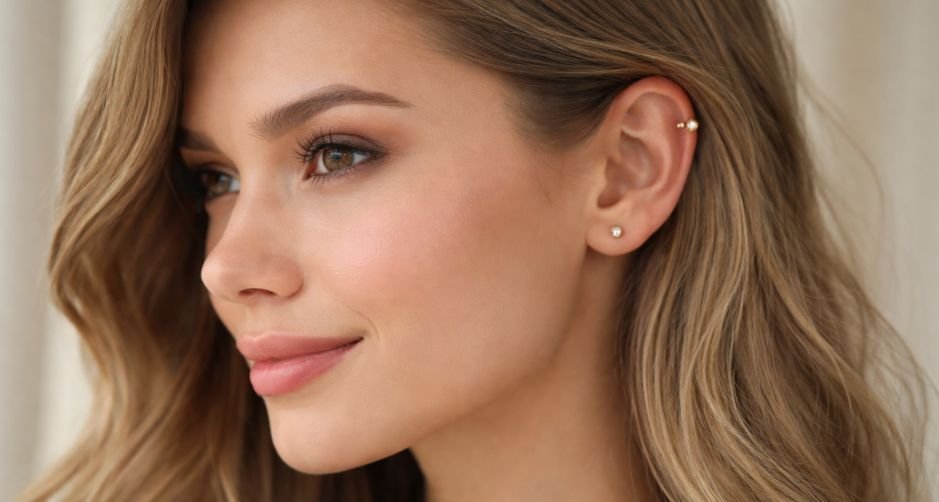
Helix piercings remain one of the most popular cartilage piercings in 2026. Known for their subtle placement along the upper ear, they offer a stylish way to update your look without making a dramatic change.
Whether you’re curious about pain levels, healing time, jewellery options, or the latest piercing trends, this guide covers everything you need to know before getting your helix pierced.
There was a time when I would change my hair almost on impulse. Cut a fringe for the sake of it, a pixie cut because I was bored. Bleach some streaks and dye them pink because they were unique at that time. And I got a tattoo I know my mum is still angry about.
Fast forward to my 40s, add motherhood into the mix, and suddenly my look has become… fixed. Same hair colour and cut. Same makeup routine. Flat shoes only. Comfort first.
My wardrobe has settled into something practical and predictable, and while I still have fun with trainers, bags, scarves and jewellery, I’m far more cautious about trying anything new than I used to be.
Which is probably why a helix piercing feels so appealing.
Piercings sit in that sweet spot between doing something new and not completely losing your mind.
They’re small, intentional changes that don’t require a full identity shift. No drastic haircut. No wardrobe overhaul. Just a tiny detail that subtly changes how you see yourself. And how your outfits come together.
Last summer, after years of letting them close up, I finally had my second lobe piercings redone. I stood in front of the mirror afterwards, tilting my head side to side, admiring the difference such a small thing had made. And almost immediately, the thought crept in: could I go one step further?
The helix piercing has been everywhere lately. That barely-there stud or slim hoop tucked into the upper cartilage of the ear, looking polished but cool, styled but not try-hard.
I’ve noticed friends slowly adding to their ear stacks, models wearing subtle cartilage piercings on runways, and influencers treating their ears like curated accessories rather than afterthoughts.
It feels like the kind of update that makes sense right now. Grown-up, but not boring. Stylish, without being intimidating. A way to experiment when you’re more cautious than you used to be. But still curious.
So here I am, deep in helix piercing research mode, figuring out what it is, how it heals, how much it hurts, and whether I’m actually brave enough to commit.
What Is a Helix Piercing?
A helix piercing sits in the upper cartilage of your ear. The outer rim that curves around the top? That’s your helix.
Unlike lobe piercings that go through soft, fleshy tissue, helix piercings puncture cartilage, which means different healing times, different jewellery requirements, and (let’s be honest) different pain levels.
But helix piercings come in variations. You can get a standard helix (the most common placement on the outer upper cartilage), a forward helix (that forward-facing fold right above your tragus), or go bold with double or triple helix piercings stacked vertically along the cartilage rim.
The beauty is you can customise placement based on your ear’s anatomy and what works with your existing piercings.
Why Everyone’s Getting Their Helix Pierced in 2026
Walk through any major city and you’ll spot them everywhere. Helix piercings have moved from alternative subculture to mainstream fashion, appearing on Spring/Summer 2025 runways at Luis De Javier and Gaurav Gupta. Models wore delicate chains connecting lobe piercings to cartilage piercings, tiny studs, and barely-there hoops.
The shift started with “curated ear” styling. Instead of matching pairs, people build asymmetrical collections across both ears, mixing metals and placement heights. The helix became essential because it adds vertical interest without overwhelming your face.
Social media accelerated everything. TikTok and Instagram flooded with piercing constellation content, and suddenly everyone wanted their ear to tell a story. Zoë Kravitz and Bella Hadid championed the stacked aesthetic.
What makes the helix special: it bridges minimalism and maximalism. Single subtle stud for “quiet luxury” vibes, or stack three for drama. Both work.
The hidden helix (placed just beneath the outer rim, partially tucked away) became 2025’s breakout variation. Secret sparkle – visible from certain angles, hidden from others.
Different Types of Helix Piercings
Standard Helix – Classic placement on the outer upper cartilage. Most versatile, works with studs, hoops, or barbells once healed.
Forward Helix – Sits in the forward-facing fold above your tragus. Looks stunning with tiny studs or small hoops.
Double/Triple Helix – Two or three piercings stacked vertically. Creates symmetrical impact. You can match jewellery or mix metals for contrast.
Mid Helix – Positioned between standard and forward helix. Gaining popularity because it sits beautifully in most ear anatomies.
Hidden Helix – Nestled just under the upper fold. Subtle, unexpected, visible from certain angles but hidden from others.
Does Getting Your Helix Pierced Actually Hurt?
Let’s address this because everyone wants to know. Yes, it hurts. But probably not as much as you’re imagining.
The anticipation feels worse than the actual piercing. That split second when the needle goes through? Sharp pinch, quick shock, then it’s done.
Forward helix piercings tend to hurt less because the cartilage is thinner there. Standard helix piercings feel more intense because the cartilage is thicker.
Pain tolerance varies wildly between people. Some describe it as a 3/10, others say 7/10. Most land somewhere around 5/10 – uncomfortable but bearable.
The ache afterwards (that dull throb for the next few hours) often bothers people more than the piercing itself.
Your piercer’s skill matters enormously. A professional who knows ear anatomy will pierce quickly and accurately, minimising discomfort. Budget piercers using piercing guns? Skip them. Needles only for cartilage piercings.
Healing Time & What to Expect
Helix piercings take 3-6 months minimum, sometimes up to a year for complete healing. Lobe piercings heal in weeks; cartilage takes months because it receives less blood flow.
Expect soreness, redness, and some swelling initially. The piercing might form small bumps during healing (usually resolve with proper aftercare). Sleep on your opposite side. Pressure on fresh cartilage delays healing and causes irritation.
Don’t change jewellery until fully healed. Your piercer will use a longer bar initially to accommodate swelling, then you can downsize at a follow-up appointment.
Aftercare: The Non-Negotiables
Get more from Lucy Loves Me
Beauty finds, film and TV picks and the trends worth your time, every week.
No spam. Unsubscribe any time.Clean twice daily with saline solution. Not rubbing alcohol, not hydrogen peroxide, not tea tree oil. Just sterile saline solution or a pre-made piercing aftercare spray.
Don’t twist the jewellery. Old advice said to rotate studs to prevent sticking. Modern piercing wisdom says leave it alone. Twisting introduces bacteria and irritates the healing tissue.
Avoid sleeping on it. Already mentioned, but worth repeating. Buy a travel pillow if you must (cut a hole in the middle for your ear).
Keep it dry. Pat your piercing dry after showers with a clean towel or use a hairdryer on the lowest setting. Moisture creates breeding grounds for bacteria.
No swimming pools or hot tubs during healing. Chlorine and bacteria don’t mix well with fresh piercings.
Leave makeup and hair products away from the piercing site. Easier said than done, but worth the effort.
Best Jewellery for Helix Piercings
Choosing the right jewellery matters even more with cartilage piercings because the material, size, and style can affect both healing and comfort.
Start with a Stud
Professional piercers almost always recommend starting with a flat-back stud rather than a hoop. Rings move more easily, which can irritate the piercing during the early healing stages. A flat-back labret keeps the jewellery stable and comfortable, especially when sleeping.
Your piercer will usually insert a slightly longer post initially to allow for swelling. Once the piercing settles, you can return for a downsizing appointment, where the bar is swapped for a shorter one that sits neatly against the ear.
Choose High-Quality Metals
Material is crucial for cartilage piercings, particularly if you have sensitive skin.
The safest options include:
- Implant-grade titanium
- Solid 14k or 18k gold
- Niobium
Surgical steel works for many people, but those with nickel sensitivities may experience irritation. Plated jewellery and inexpensive metals are best avoided while your piercing heals.
Jewellery Trends for 2026
Helix jewellery is becoming more refined and sculptural in 2026. Instead of oversized statement pieces, the focus is on small details and intentional placement.
Some of the biggest jewellery trends include:
Micro studs
Tiny gemstone or gold studs remain the most popular choice for helix piercings. They create a clean, polished look and work beautifully as part of a curated ear.
Ultra-thin hoops
Once healed, many people swap their studs for delicate seamless hoops. The newest versions are extremely slim, creating a barely-there ring of gold or silver around the cartilage.
Sculptural shapes
Minimalist jewellery with subtle shapes (curved bars, tiny stars, geometric studs, or delicate marquise stones) adds interest without overwhelming the ear.
Fine chains
One of the most elegant styling details right now is a thin chain connecting a helix piercing to a lobe piercing. The effect feels light and jewellery-like rather than edgy.
Matching pairs
Rather than mixing dozens of styles, many people are opting for two identical helix studs placed in a clean line, creating a symmetrical and sophisticated look.
The mood for 2026 is refined, minimal, and intentional. This means jewellery that enhances the ear rather than dominating it.
How to Style Your Helix in 2026
Ear styling has evolved significantly over the past few years. What began as the “curated ear” trend (layering multiple piercings across the ear) has shifted toward something more deliberate and balanced.
In 2026, helix piercings are less about stacking endlessly and more about working with the natural architecture of the ear.
The Minimalist Helix
A single helix stud paired with two lobe piercings creates an understated but stylish look. Keeping everything in the same metal (gold, silver, or platinum) gives the ear a polished, cohesive feel.
This is one of the most popular choices for people getting their first cartilage piercing.
The Double Helix
Two helix piercings placed close together along the cartilage rim create a subtle but striking effect. Sometimes referred to as a “snakebite helix,” this look works particularly well with matching micro studs or slim hoops.
The symmetry gives the ear structure without feeling overly busy.
The Hidden Helix
For those who prefer something more discreet, the hidden helix has become one of the most talked-about placements. Positioned just under the upper fold of the ear, the jewellery peeks out from certain angles but remains partially concealed.
It’s perfect for anyone who wants a touch of sparkle without an obvious piercing.
The Chain Connection
Fine jewellery chains linking a helix piercing to a lobe piercing remain popular, but the styling has become lighter and more delicate than previous years. Instead of heavy chains, thin, barely-there strands create movement and elegance.
Mixing Metals (Carefully)
While mixing metals was once considered a fashion mistake, it’s now widely accepted — as long as it feels intentional. A gold helix stud paired with silver lobe earrings can look modern and effortless when balanced properly.
The key is restraint. One or two contrasting pieces usually look more sophisticated than mixing everything at once.
Best UK Jewellers for Helix Piercings
Astrid & Miyu (opens in new tab) – Sterling silver, solid gold, and platinum-plated titanium. Curved crystal piercing studs from £185. Free UK delivery.
Monica Vinader (opens in new tab) – British luxury jewellery brand offering vermeil and solid gold options. Known for quality craftsmanship and contemporary designs perfect for curated ear stacks.
Missoma (opens in new tab)– London-based fine jewellery brand with elegant helix studs and hoops. Their minimalist aesthetic works beautifully for both initial piercings and healed cartilage.
Maria Tash (opens in new tab) – Luxury 18-karat gold diamond earrings from £290 at Net-A-Porter. Investment pieces that last decades.
Mejuri (opens in new tab)– Cartilage pave diamond mini hoop £178. Reliable quality, perfect mid-range option.
Lena Cohen London (opens in new tab) – 18k solid gold helix designs. Higher price point, exceptional craftsmanship.
Lovisa (opens in new tab)– Budget-friendly surgical steel, silver, and gold. Great for trying styles before investing.
Solace Jewellery (opens in new tab) – Hypoallergenic stainless steel for sensitive skin. Water-resistant, designed for 24/7 wear.
Runway Inspiration: How to Style Your Helix
The Spring/Summer shows delivered serious piercing inspiration. Designers treated piercings as garment extensions.
The Minimalist Stack – Single helix stud paired with two lobe piercings. Keep everything in the same metal for clean, editorial vibes.
The Mixed Metal Moment – Gold helix hoop, silver forward helix stud, rose gold lobe studs. Mixing metals is officially acceptable in 2026.
The Chain Connection – Delicate chain connecting helix to lobe. Dramatic but wearable. Zoë Kravitz and Bella Hadid have championed this look.
The Hidden Helix – Keep standard piercings simple, add hidden helix as your secret detail. Visible in profile, hidden straight-on.
Beginner-Friendly Tips
Start with one piercing. Confirm placement before the needle (you can’t move it after). Choose a reputable piercer with good reviews and proper sterilisation.
Stock up on saline solution and travel pillows before your appointment. Don’t get pierced before beach holidays or major events. Bring a friend for moral support.
Should You Get Your Helix Pierced?
Only if you’re ready for the commitment. Helix piercings look effortless but require months of careful aftercare. You’ll need to modify your sleeping position, adjust your hair routine, and resist the urge to change jewellery too soon.
But if you’ve been eyeing that subtle stud or tiny hoop, if you’ve been building your ear stack mentally for months, if you want that finishing touch for your curated aesthetic? Go for it.
DISCLAIMER:
The information on Lucy Loves Me is provided for informational and entertainment purposes only and should not be considered medical advice. Always consult a qualified healthcare professional or reputable piercer before getting a piercing or if you have concerns about healing or aftercare. Individual results and experiences may vary.
You Might Also Like:
- The Return of Lace: 2025’s Dreamiest Trend – Delicate details everywhere
- Holiday Makeup Trends 2025 – Complete your party look
- 2025 Nail Trends: Soap Nails to Bold French Tips – Polish your style
- The Office Siren Trend: Workwear in 2025 – Professional styling
- Perfume Trends 2025 – Finish your aesthetic
- Food-Inspired Beauty Trends 2025 – Beauty innovation