

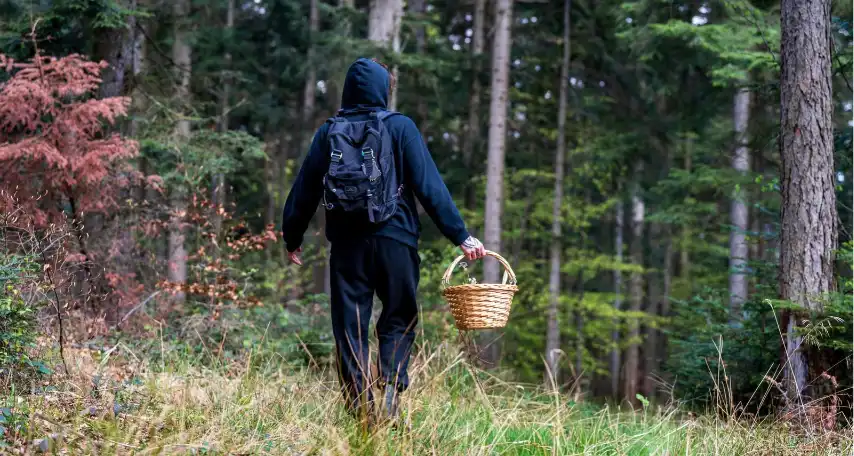
Every October the hedgerows fill up, and so does the internet, with people holding baskets and looking pleased with themselves. Hardly any of them mention the law. Which is odd, because the foraging rules UK pickers are meant to follow fit on a postcard. One clause does most of the work. It dates from 1968, and the trouble starts with everything layered on top of it: local byelaws, and three different legal systems across four nations.
I’ll admit that my own foraging experience is fairly limited. I’ve collected the odd conker on an autumn walk, partly because I keep hearing that they help to ward off spiders (whether they actually do is another matter). I’ve never ventured into the woods with a basket to gather ingredients for dinner, but the idea of picking a few seasonal treats along a familiar walking route does appeal. I just hadn’t realised there were quite so many rules about what you can take, or where you’re allowed to take it.
So, here’s the law first, and the nice bit about sloes and chestnuts second. A quick note before we start: I’m a blogger and not a solicitor, so treat this as a plain-English map of the rules and go to the Acts themselves if you need the exact wording.
Is foraging legal in the UK?
Mostly, yes. In England and Wales, the answer sits in section 4(3) of the Theft Act 1968 (opens in new tab). It says that someone who picks mushrooms growing wild, or flowers, fruit or foliage from a plant growing wild, isn’t stealing.
Foragers call these the four Fs: fruit, flowers, foliage and fungi. The Act counts shrubs and trees as plants, which is why a hedgerow sloe is treated the same as a bramble.
There’s a catch in the same sentence. The protection disappears if you’re picking for reward, for sale or for any other commercial purpose. That’s wider than it sounds. A restaurant supplier filling a van is obviously out. But so, on a strict reading, is the jar of hedgerow jelly you sell for £3 at the school fair, because a sale is a sale.
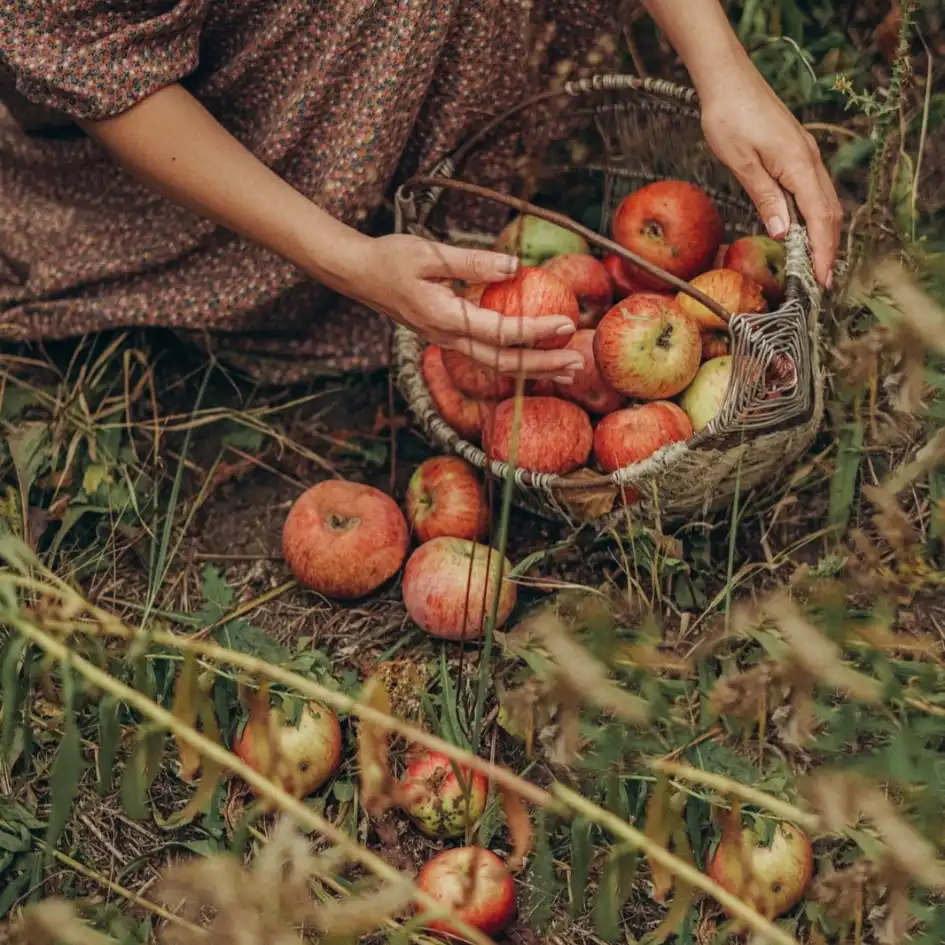
Two more words matter: growing wild. An apple tree in someone’s orchard isn’t wild, and neither is the pear leaning over a garden wall. Those belong to whoever planted them.
The foraging rules UK walkers break without noticing
The Theft Act covers what you take. A second law covers how you take it. Section 13 of the Wildlife and Countryside Act 1981 (opens in new tab)makes it an offence to uproot any wild plant unless you’re the landowner, the occupier or someone they’ve authorised. Picking a leaf is fine, then. Pulling the whole thing out of the ground is not.
The Woodland Trust’s guidance reads this as covering fungi and lichens too, so digging is the line you don’t cross without asking. Some plants can’t be touched at all. Schedule 8 of the same Act lists species so rare that picking a single stem is an offence, with or without the landowner’s blessing. You’re unlikely to stumble on most of them along a canal towpath, but it’s the reason every sensible guide tells you to leave anything you can’t name.
Then there’s the question of being there in the first place. The fruit isn’t stolen, fine. What the Theft Act doesn’t hand you is a right to walk across a private field to reach it. Stick to footpaths, bridleways and land you know is open, and you sidestep the trespass argument entirely. Open access land has its own twist. The Countryside and Rights of Way Act 2000 (opens in new tab) gave walkers in England and Wales the right to roam over mapped mountain, moor, heath and down, but Schedule 2 says that right doesn’t cover anyone who intentionally removes or damages a plant, shrub, tree or root. Roam all you like. Just don’t assume the roaming comes with a harvest.
Where the answer is a flat no
Local rules beat the general one. Always. London’s Royal Parks are the clearest example. Regulation 4 of the Royal Parks and Other Open Spaces Regulations 1997 (opens in new tab) bans interfering with any plant or fungus without written permission, and that includes the sweet chestnuts in Richmond Park.
A Metropolitan Police freedom of information response published in April 2025 counted 96 warning notices for this since 2022, with 63 of them in Richmond Park alone. Nobody was fined, though the Met said repeat offenders would be considered for prosecution. Epping Forest is stricter in practice. Picking fungi there is banned under the forest’s byelaws, and the City of London Corporation, which runs it, does enforce them.
Get more from Lucy Loves Me
Beauty finds, film and TV picks and the trends worth your time, every week.
No spam. Unsubscribe any time.In the year to April 2021 it handed 27 people an £80 fixed penalty each, and it once confiscated a single bag of fungi weighing 49kg. This August it went further and asked influencers and visitors to leave the fungi alone, after a run of mushroom-picking videos online.
Caroline Haines, who chairs the committee that looks after the forest, put it as “click, don’t pick”. I think that’s fair. A forest on the Central line can’t feed everyone who has watched a foraging reel, and the fungi are doing a job for the trees that no basket of them will ever do in a kitchen.
The big charities sit somewhere in the middle. National Trust policy welcomes sustainable picking for personal use on most of its land, but not on Sites of Special Scientific Interest without consent. Over at the Woodland Trust, personal foraging is allowed in many woods and banned in others, with signs at the entrance to tell you which. Read the board by the car park. It takes ten seconds.
Scotland and Northern Ireland do it differently
The Theft Act 1968 stops at the border. Scotland has no equivalent clause. What it has is the Scottish Outdoor Access Code, which says that customary picking of wild fungi and berries for your own consumption isn’t affected by the access legislation.
Commercial picking is excluded from access rights and needs the land manager’s permission. NatureScot published fuller guidance on foraging in Scotland in June 2025, and it’s worth ten minutes if you’re heading north with a tub.
The uprooting offence applies there too. Northern Ireland is closer to England. Its own Theft Act, passed in 1969, has a section 4(3) (opens in new tab) that says much the same thing about mushrooms, flowers, fruit and foliage
What can you forage in autumn in the UK?
Plenty, and most of it is at eye level. The Woodland Trust’s October list is a good place to begin, because everything on it is common and hard to mistake once you’ve seen it:
Sweet chestnuts, which drop through October and into early winter. Look under big old trees for husks that have already split.
Sloes, the blue-black fruit of the blackthorn, in hedgerows until December. Pick after the first frost or cheat and put them in the freezer.
Rosehips, red or orange, on wild roses until November. Snip them at the base and mind the thorns.
Hazelnuts, if the squirrels have left you any.
Bullaces, a small wild plum that ripens later (opens in new tab) than most hedgerow fruit and makes a good crumble.
One mix-up is worth learning before you go. Sweet chestnuts and conkers are different trees, and conkers are toxic.
France’s food safety agency, ANSES, puts the difference simply: a sweet chestnut husk is brown, covered in long fine bristles and usually holds two or three flattened nuts, while a horse chestnut husk is thick and green, has short spikes set wide apart and usually holds one round, glossy conker. Hedgehog means dinner. Mace means leave it.
You’ll notice there are no mushrooms on my list. That’s deliberate. I’m not going to tell anyone which wild fungi are safe to eat, because a blog post is the wrong tool for that and getting it wrong can kill you. The Woodland Trust’s line is the right one: only eat something if you’re completely certain what it is. Photograph the fungi and pick the sloes.
Foraging for beginners: how much is too much?
The law doesn’t give a number, so the charities do it with a principle. The Woodland Trust (opens in new tab) says to take only what you plan to eat, pick only where there’s plenty, and leave enough for the birds, the plant itself and the next person along.
A bowl of sloes for one bottle of gin passes that test easily. Stripping a bush doesn’t. Start small. Pick one thing you can identify without a book, on one walk you already do, and see whether you use it. If the rosehips are still in a bag at the back of the fridge in three weeks, you’ve learned something useful about yourself, and the blackbirds would have liked them.
I’m not quite ready to head into the woods with a basket and come home with ingredients for supper, but I might start paying a little more attention to what’s growing along my usual walking routes. Perhaps I’ll try collecting a few sloes or sweet chestnuts, provided I know I’m allowed to pick them. For now, I’ll leave the mushrooms to the experts and the conkers to their rather questionable reputation as spider deterrents.
Read next
An autumn walk playlist: 25 songs for crunchy leaves and cold hands