

Take one body into five shops and you can walk out as three different sizes. A 12 in the first, a 14 next door, a 10 if somebody’s feeling generous. So why do dress sizes vary between shops in the UK, when the number on the hanger looks so official?
The short answer: nobody makes them agree. I went through the published size guides of five high street names and wrote down what each one says a size 12 woman measures. Some of the numbers are closer than any fitting room would have you believe, and one pair of charts is a full dress size out of step.
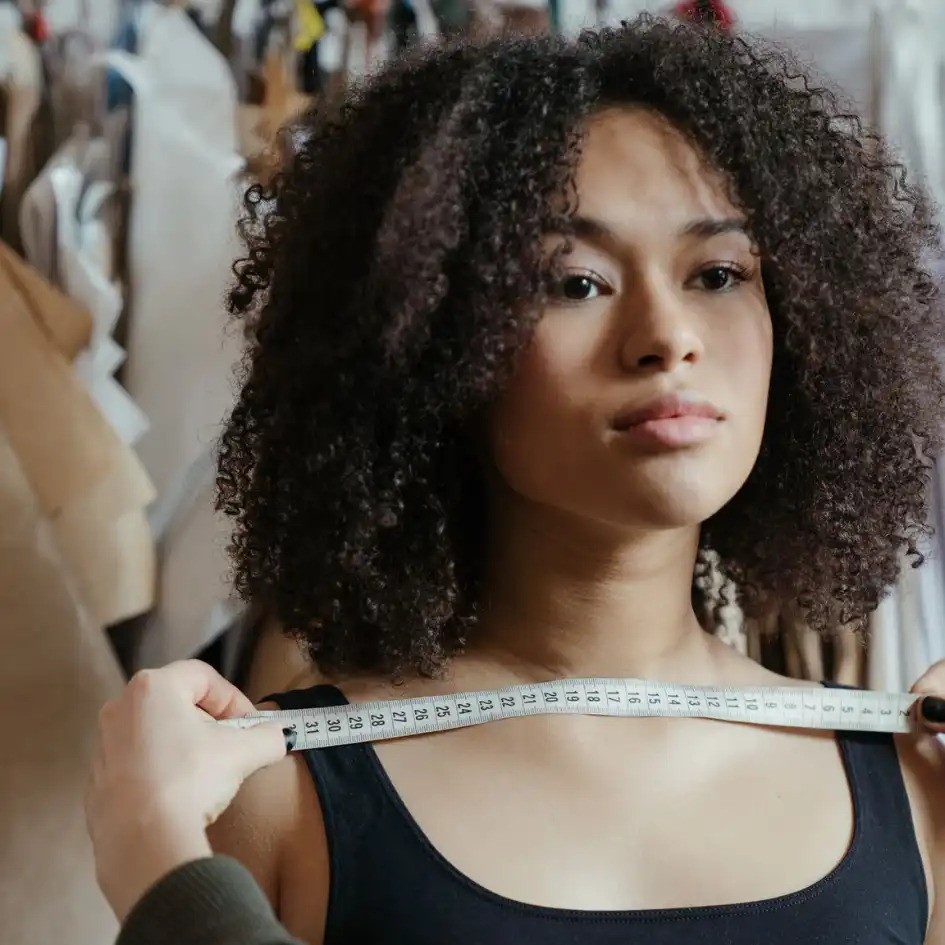
My own experience of UK high street sizing has been all over the place. I was usually a 12, but depending on the shop, I could just as easily need a 10 or a 14. M&S used to be one of the brands I could rely on, but even that has become less predictable, particularly when it comes to trousers. Trying to find clothes that fit properly has become a frustrating exercise, and I’ve found myself shopping less in places like Zara and more in Mango, Mint Velvet and Jigsaw, where I’ve had better luck with consistency. It’s not that I’ve suddenly forgotten what size I wear. It’s that the size on the label seems to mean less and less.
UK dress sizes explained: there’s no rule
A British Standard for women’s clothing sizes does exist. It’s called BS 3666, it dates from 1982, and it defines each size by bust and hip measurements (opens in new tab). It’s also voluntary.
Shops can ignore it, and most do. Europe had a go too. EN 13402, drawn up between 2001 and 2006, labels clothes by the body measurements in centimetres they’re cut for, which is so sensible it was never going to catch on here. That leaves every retailer free to decide what its own 12 means. And each one decides with its own customer in mind. Brands usually build a range around a fit model, a real person whose proportions become the template, and every other size is scaled up or down from her. Different woman, different 12.
What a UK size 12 measures in five shops
These are the body measurements from each retailer’s own women’s size guide, checked in October 2026. Worth knowing before you read them: a size chart describes the body the shop has in mind, which isn’t the same thing as the size of the dress.
M&S says a 12 is a 92cm bust and a 74.5cm waist (opens in new tab).
At Next, a 12 is a 93cm bust, a 75cm waist and 102cm hips (opens in new tab).
New Look’s 12 is a 94cm bust, a 75cm waist and 100cm hips (opens in new tab).
Get more from Lucy Loves Me
Beauty finds, film and TV picks and the trends worth your time, every week.
No spam. Unsubscribe any time.H&M’s 12 is a 92cm bust, a 76cm waist and 100cm hips (opens in new tab)
Zara’s L, sold as a UK 12, is a 96cm bust, a 76cm waist and 104cm hips (opens in new tab). Look at the waists first.
Every chart lands between 74cm and 76cm, which is less than an inch of disagreement across five shops. That’s far better behaved than I expected. The bust column falls apart. Next draws its 12 at 90cm and New Look draws its 12 at 94cm. Four centimetres doesn’t sound like much until you check Next’s size 14, which is a 94cm bust. So the woman New Look calls a 12 is, across the chest, the woman Next calls a 14. Same body, one whole size apart.
M&S vs Zara sizing: the chart that surprised me
Zara has the reputation for running small, and M&S for being kind. The charts say something odder. On paper, Zara’s L describes a bigger body than the M&S 12 does: 4cm more at the bust, if the figures above hold. So why does the Zara dress feel tighter? Because the chart is only the starting point. A designer then decides how much room to add on top of the body measurement (pattern cutters call it ease), and a slim, sharp-shouldered cut adds very little.
Zara also sizes in letters and European numbers first, with the UK size as a translation. Something always gets lost. This is the bit most “size 12 measurements” tables miss. Two shops can agree on your body and still disagree completely about how close a dress should sit to it.

Vanity sizing in the UK: did the 12 get bigger?
Yes, and there’s proper evidence for why. Between 2001 and 2002 a national survey called SizeUK put more than 11,000 people through 3D body scanners. It was led by Professor Philip Treleaven at University College London and it was the first national sizing survey since 1951.
His summary of the women’s results: height, bust and hips had each gone up by about an inch and a half in fifty years. Waists had gone up by six and a half inches. A retailer looking at those numbers has two options. It can tell loyal customers they’ve gone up a size, or it can quietly redraw the chart so they stay a 12. Guess which one sells more dresses. That’s vanity sizing, and I can’t get very cross about it.
The 1951 size 12 was cut for a body most of us no longer have. What does annoy me is that every shop redrew its chart by a different amount and told nobody. Sometimes it goes the other way.
In June 2018, after years of complaints that its clothes came up tiny, H&M announced it was changing its womenswear measurements “to be in line with UK sizing”, so that “the previous measurements and fit of a size 12 will now be the measurements of a size 10”. One press statement, and thousands of women dropped a dress size without leaving the house.
How to shop when the label means nothing
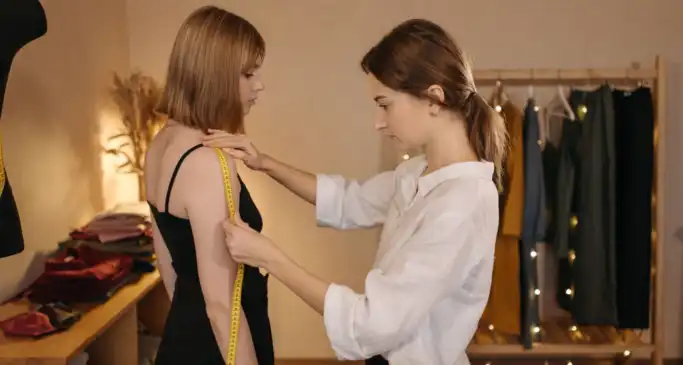
Stop treating the number as a fact about you. It’s a shop’s filing system. Three measurements do the job the label can’t: bust at the fullest part, waist at the narrowest, hips at the widest. Write them in centimetres in your phone, because every size guide in the list above uses them. Then check the chart before the basket, every time, even in a shop you’ve used for years. Charts get redrawn. H&M proved that, and it won’t be the last shop to try it.
The same goes for ranges inside one shop: petite, tall and curve lines usually have charts of their own, so a 12 in the main range tells you little about a 12 in the petite one. Some product pages give garment measurements as well as body ones. Use those. They tell you how much room the designer added, which is the part no size guide will admit to.
Between two sizes? Buy for your biggest measurement. Taking a waist in is a quick job for an alterations shop, while letting a bust out is usually impossible.
One more thing, for the fitting room. If the 12 won’t zip and the 14 does, the dress hasn’t found you out. You’ve just met a different fit model. A tape measure is the only thing in this whole business that gives the same answer twice.
Read next
Autumn wedding guest outfits in the UK: dressing for a British October
The Low-Rise Skirt Is Back, and I’m (Surprisingly) Not Mad About It