
Spoiler warning: This article discusses major plot points and the season finale of Carrie (2026), as well as elements of Stephen King’s novel and earlier film adaptations.
The eight-episode miniseries adaptation of Carrie, which showcases Mike Flanagan’s modern spin on Stephen King’s classic story of relentless bullying and bloody revenge, premiered on 7 October 2026 on Prime Video. It quickly claimed the first spot on Prime Video’s worldwide TV chart (opens in new tab) reaching No. 1 in 105 countries, (opens in new tab)and it also recorded the year’s second-biggest debut for a first-season Prime Video series in Nielsen’s streaming rankings.
Variety observed that “Flanagan’s Carrie puts its own stamp on King’s narrative while examining the peculiarities of the social media age” (opens in new tab), calling it “harrowing and fearless”, while TheWrap declared that “the contemporisation experiment for Carrie White’s story is a resounding success backed up by a banger soundtrack and sufficient teen angst” (opens in new tab). However, it did not fail to generate a mixture of expectancy, excitement and reluctance in equal parts, which started before the series was even released and kept looming over it after the season finale.
Copyright: © Amazon Content Services LLC
The many adaptations of Carrie
When the series was first announced, most people were excited about a new Carrie rendition, yet the series also had the gruelling task of justifying its own existence. It started a heated debate on whether we need yet another Carrie adaptation, as the modern cinema and TV industry seems more interested in sure-fire remakes and adaptations that generate maximum revenue while taking the minimum amount of risk. The debut novel of horror powerhouse Stephen King, published in 1974, has inspired three screen adaptations of the original story, including the 1976 classic, the 2002 television film and the 2013 remake, as well as the sequel The Rage: Carrie 2 and a stage musical. The first movie, released in 1976 and starring Sissy Spacek, remains the most celebrated screen adaptation of King’s novel, with subsequent attempts falling short for reasons we will discuss later in this article.
Carrie and the kings of horror
But this is not Flanagan’s first time adapting a Stephen King novel. The collaboration between the two creatives started way back in 2017 with Flanagan’s movie adaptation of Gerald’s Game (opens in new tab), followed by Doctor Sleep (opens in new tab) (the sequel to The Shining) in 2019, both of which were generally well-received. Moreover, Flanagan stands right next to King as an icon of the horror genre, having written and directed hits such as Hush (2016) (opens in new tab), The Haunting of Hill House (2018) (opens in new tab), and The Haunting of Bly Manor (2020) (opens in new tab). Samantha Sloyan, one of Flanagan’s long-time collaborators, would also star in his new series as Carrie’s mother, Margaret White. Needless to say, many viewers were reassured by the involvement of Flanagan, one of modern horror television’s most distinctive creators.
The many faces of Carrie
Get more from Lucy Loves Me
Beauty finds, film and TV picks and the trends worth your time, every week.
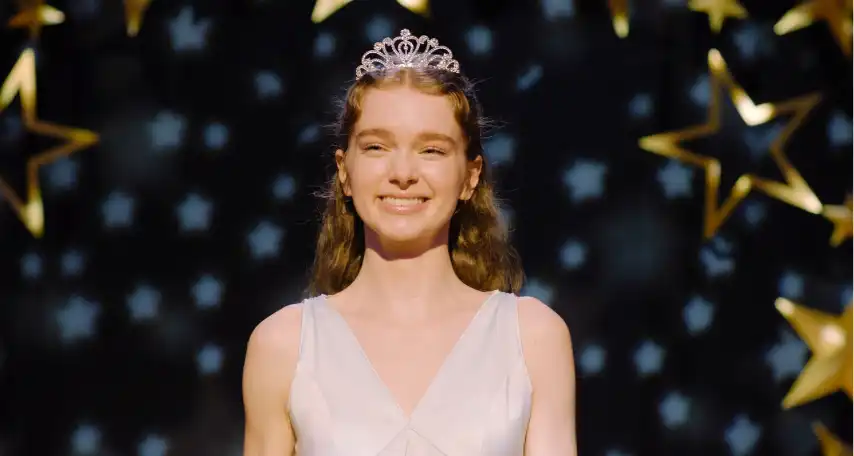
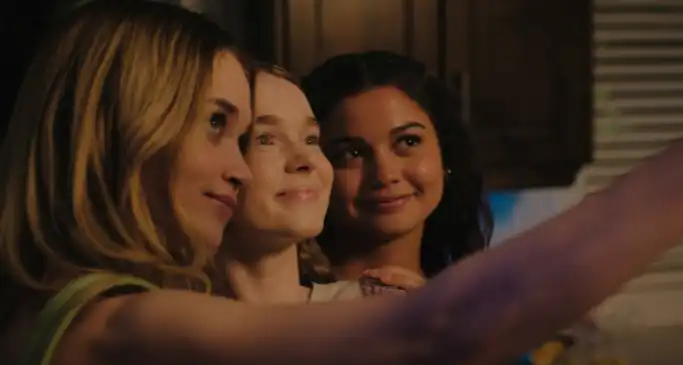
No spam. Unsubscribe any time.Stephen King’s novel tells the story of Carrie White, a 16-year-old girl with telekinetic powers who lives under the thumb of her religiously zealous mother. When she gets her first period at school and believes she is bleeding to death, the cruel treatment she receives from the other students triggers a series of events that will end in bloodshed for the town of Chamberlain. However, the audiences have quickly picked up on the fact that the Carrie White envisioned by King never materialised onscreen. In the book, Carrie is overweight and unattractive, exhibiting off-putting, socially-stunted behaviour and lack of personal care that make sense as the natural consequences of her traumatic upbringing. Conversely, many screen adaptations have presented Carrie differently from the novel’s more physically awkward and socially isolated characterisation. In the miniseries, however, Carrie becomes this incredibly beautiful, kind, warm and hopeful girl, her behaviour jarringly social and well-adjusted despite her horrific backstory.
Carrie as the perfect victim
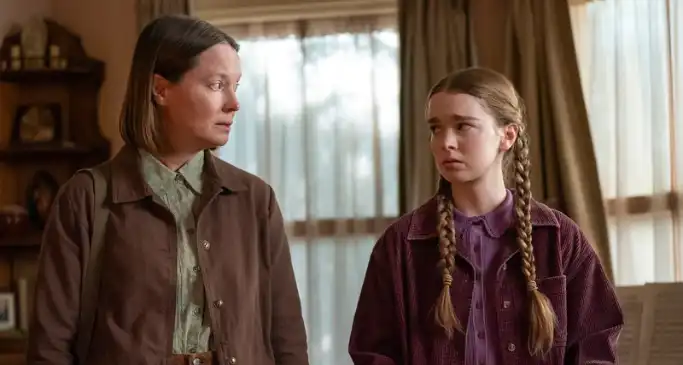
The adaptations want you to empathise with Carrie and cheer for the well-deserved revenge she exerts on her bullies; they want you to relate to the poor, beautiful soul who’s done nothing wrong and is being harmed for no reason by the mean-spirited, asocial, failing bullies, reminiscent of tales like Cinderella and Snow White. The difference is clear as day: in the adaptations, the viewer is supposed to identify with the “perfect” victim. But the way Stephen King wrote it, viewers are invited to consider their own potential complicity, whether as bullies or silent bystanders. In the real world, bullying is rarely something done by an evil, ugly, insecure person to a beautiful, kind, perfect victim. It’s social behaviour, done by the majority to a minority that doesn’t conform to their standards of normality. The miniseries even declaws Carrie’s mother and turns her from a frightening woman in religious psychosis, a truly terrifying piece of a horror puzzle whose repulsive behaviour is supposed to make your blood curdle, into a more realistic and subtly abusive mother.
Carrie’s bloody revenge
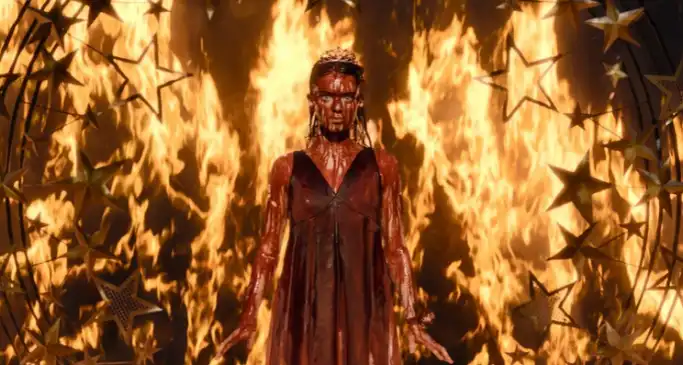
Another aspect of the novel that has been interpreted differently across its screen adaptations is the full extent of the destruction that follows Carrie’s humiliation at prom. This marks her psychological break and subsequent rampage through Chamberlain.
In the novel, after getting doused in pig’s blood, Carrie lets all the students burn to death in the gym before unleashing hell on the rest of the town and killing her own mother. In the movies, Carrie’s revenge is mostly relegated to the prom venue and her own house (maybe with the exception of the 2002 movie), downplaying the extent of her murderous spree.
Carrie is indeed a victim of bullying, but by the end of the story, she becomes a monster in her own right, killing numerous innocent children, elderly people and bystanders in cold blood, leading some readers to see her story as a metaphor for school shootings before school shootings were even a thing. In the miniseries, the scene is mellowed down by having the kind, sweet Carrie be influenced by the astral projector Emaline throughout most of the story, until she literally takes control of Carrie’s mind in order to commit the atrocities at prom, effectively washing Carrie’s hands off the bloodshed (ain’t that ironic?). In addition, Margaret survives her daughter and is killed by the mysterious interviewer instead.
Copyright: © Amazon Content Services LLC
The future of Carrie
So, is the new Carrie series a failure? Absolutely not. Carrie (2026) does not aim to be a faithful adaptation of the 1974 book, but rather borrow King’s character and recontextualise her story into a modern, intricate plot, turning it into a supernatural drama in the vein of Stranger Things instead of a psychological tragedy like May (2002). I believe most of the criticism comes from the fact that we’ve had no accurate Carrie adaptation as of yet, rather than Flanagan’s series in itself failing to provide it. The series succeeds at what it endeavours to do, namely tell the coming-of-age story of a superpowered girl surrounded by modern threats such as cyberbullying and school shootings, who gets taken advantage of by everyone she loves and enters a perilous world of supernatural powers she doesn’t fully understand. However, it is difficult to overlook the way it propagates the myth of the perfect victim that is already prevalent in storytelling.
The series has already been renewed for a second season, despite the first season reaching the end of King’s original story. Flanagan has also spoken about his ambition to develop the adaptation into a three-season arc, although only the second season has been confirmed so far.
The introduction of Emaline, Margaret’s own supernatural abilities and Carrie’s final escape with Emaline could potentially signal Flanagan’s intention to bring Carrie into a wider King-inspired universe, possibly alongside Doctor Sleep (opens in new tab). I absolutely devoured this movie when I first saw it back in 2019, so I have to say, I am more excited by this potential cross-over than I was by season one of Carrie.
Mike Flanagan is my favourite TV creator, and his creative work has influenced my own writing more than words can express, so I do trust his plan, whatever that might be. Thus, it is ironic that my first article should be one in which I criticise my idol, but that’s simply how the tides of creativity turn sometimes. In the end, I guess the only thing left to do now is to wait and see what the kings of horror have in store for us.
Read next
Why Stephen King is Still the King of Horror After 50 Years
The Femme Fatale Reimagined: Gillian Flynn’s Gone Girl and Amy Dunne’s Twisted Legacy