
Sunday night has one job. It has to make Monday feel further away than it is, and nothing does that like a misjudged proposal in a large house with too many candles.
The good news is that the best period dramas on BBC iPlayer cost you nothing extra. No new subscription, no free trial you’ll forget to cancel. You do need a TV licence to use iPlayer at all, live or on demand, and that went up to £180 a year on 1 April 2026. If you’ve already paid it, you may as well get your money’s worth.
Everything here was available on iPlayer as a full box set on 16th October 2026.
My three favourite period dramas of all time
Before getting into the BBC iPlayer recommendations, there are three period dramas I always come back to. They are a little outside the main list, but if you love a good costume drama, they’re well worth adding to your watchlist.
Sense and Sensibility (1995): the comfort watch I keep coming back to
The 1995 film is currently on Amazon Prime, and I recently watched the 2026 version before going back to the original. The newer adaptation is beautifully shot, with strong performances from its leads, although some of the supporting casting didn’t quite work for me, particularly Willoughby. I did love the more carefree approach to the clothes and hair, especially for Marianne, which felt true to her character.
Even so, it’s impossible not to compare the two, and the 1995 version still has something special. With a cast that includes a remarkably young Kate Winslet, Hugh Laurie, Imelda Staunton and the incomparable Alan Rickman, it’s the cinematic equivalent of a mug of hot chocolate overflowing with marshmallows and a blanket you have no intention of sharing. It’s a film I can completely lose myself in, no matter how many times I’ve seen it.
Check where to watch. (opens in new tab)
Death Comes to Pemberley (2013): what happened after Darcy and Elizabeth married?
If you’ve ever wondered what happened after the happy ending of Pride and Prejudice, this three-part adaptation of P.D. James’s novel offers a rather darker answer. Set several years after Elizabeth Bennet and Mr Darcy’s marriage, it begins when Lydia Wickham arrives at Pemberley in a panic, claiming that her husband has been murdered. Suddenly, the peace of the Darcy household is shattered by a murder investigation, old secrets and the very real possibility of scandal.
Anna Maxwell Martin is wonderfully suited to period drama, Matthew Rhys makes a compelling Darcy, and Trevor Eve adds plenty of gravitas. It’s a clever combination of Austen’s world and a classic country-house murder mystery, with enough intrigue to keep you watching. Think Pride and Prejudice, but with considerably more trouble brewing in the woods.
Check where to watch. (opens in new tab)
The Pursuit of Love (2021): aristocratic escapism with a sharp edge
Based on Nancy Mitford’s novel, this three-part BBC adaptation follows two cousins, Linda Radlett and Fanny Logan, growing up between the wars. While Fanny longs for stability, Linda is determined to find the great romantic love she’s read about, throwing herself into relationships and adventures with very little regard for convention.
Lily James is wonderfully impulsive as Linda, while Emily Beecham provides a quieter counterpoint as Fanny. Dominic West and Andrew Scott are also excellent, and the production is a feast of beautiful houses, fabulous clothes and interwar glamour. Beneath all that escapism, though, is a sharper story about female independence, social expectations and the rather different consequences of freedom for women. It’s funny, romantic and occasionally heartbreaking, with a mischievous streak that stops it feeling like just another period romance.
Check where to watch. (opens in new tab)
Available on BBC iPlayer:
Pride and Prejudice (1995): the one every other adaptation gets measured against
Start here, always. Andrew Davies’s six-episode adaptation is 31 years old and still the version people mean when they say they love Pride and Prejudice (opens in new tab). Jennifer Ehle’s Lizzie is sharper and funnier than most of the Elizabeths who came after her, and Colin Firth’s Darcy started a national fixation that the press at the time called Darcymania.
Six hours sounds like a lot until you notice you’ve watched four of them without getting up. There’s a practical reason to watch it now. Netflix has its own six-part version on the way (opens in new tab), written by Dolly Alderton, with Emma Corrin as Elizabeth and Jack Lowden as Darcy
Everyone will have an opinion on it by Christmas, and yours will be better informed if you’ve seen the 1995 one first.
The Other Bennet Sister (2026): the plain one gets her turn
If you want period dramas like Pride and Prejudice but you’ve seen the original too many times to be surprised by it, this is the obvious next step. It takes Mary, the bookish middle sister everybody in the novel talks over and hands her the whole story. Ella Bruccoleri plays her. Ruth Jones is Mrs Bennet, with Richard E Grant as Mr Bennet, which tells you most of what you need to know about the tone.
It’s based on Janice Hadlow’s 2020 novel and it went out on BBC One in March 2026. The format is the clever bit: ten episodes of about half an hour each. That makes it the easiest thing on this list to fit around a Sunday that’s already half gone, because two episodes is an hour and you’re still in bed by ten.
Get more from Lucy Loves Me
Beauty finds, film and TV picks and the trends worth your time, every week.
No spam. Unsubscribe any time.A three-part Christmas special is coming to iPlayer and BBC One this winter, so there’s a deadline of sorts. It’s kinder than Austen, and I don’t mean that as a complaint.
Wolf Hall (2015 and 2024): Tudor politics for people who think they hate Tudors
Twelve episodes across two series, both on iPlayer. The first covers Thomas Cromwell’s rise at the court of Henry VIII, and the second, The Mirror and the Light, picks up after Anne Boleyn’s execution in 1536 and follows him to the end.
Mark Rylance barely raises his voice. That’s the whole trick of it. He stands at the edge of rooms and watches, and you find yourself leaning towards the screen to work out what he’s thinking, while Damian Lewis’s Henry gets more frightening the friendlier he becomes.
Hilary Mantel won the Booker Prize for both of the novels it draws on, and the scripts trust you to keep up without a narrator explaining who’s related to whom. A warning, though. It’s dark in the literal sense, lit by candles and windows, so don’t watch it on a phone in a bright room. Save it for after dark with the big light off.
Bleak House (2005): Dickens with the pace of a soap
Dickens on telly can sometimes feel like homework. This one doesn’t. The BBC cut the novel into short episodes and ran it like a serial you had to keep up with which is closer to how Dickens was first read than any two-hour film has managed.
Anna Maxwell Martin is Esther Summerson. Gillian Anderson is Lady Dedlock, frozen and impossible to stop looking at, and Charles Dance is the lawyer circling her.
Of all the BBC costume dramas on this list, it’s the one I’d give to someone who says they don’t like costume drama. The subject is a court case that has dragged on for so long that nobody alive remembers how it began. It ought to be dull. However, it plays like a thriller with better hats.
It’s also worth playing spot the Anna Maxwell Martin. She’s in three of my recommendations: Bleak House, Death Comes to Pemberley and And Then There Were None. Clearly, I’m not the only one who thinks she’s rather good in a bonnet.
Jane Eyre (2006): the best argument for a wet October
This was Ruth Wilson’s breakthrough, playing Jane opposite Toby Stephens as Rochester. She makes Jane clever first and lovelorn second. Most versions get that backwards.
This is the one to save for properly foul weather. Thornfield looks cold enough to see your breath in, the moors are doing what moors do, and the whole thing is over in a single evening if you start early enough
Put the heating on, or don’t, and feel smug about the fact that nobody is keeping secrets in your attic.
Small Island (2009): the period drama that isn’t about a big house
Two parts, and the cast list reads like a joke about how much talent you can fit in one production: Naomie Harris, David Oyelowo, Ruth Wilson again, and Benedict Cumberbatch before most people knew his name.
It’s adapted from Andrea Levy’s novel and moves between Jamaica and Britain, before and after the Second World War. Hortense arrives in London expecting the country she was taught about at school. What she gets is a single cold room and a landlady who is doing her best, which isn’t the same as doing enough.
Most lists of the best period dramas in the UK are wall-to-wall Regency. That’s a shame. The 1940s are a period too, and this is a far more honest picture of what Britain was like for the people who came here to help rebuild it. It’s also the shortest thing I’m recommending, so there’s no excuse.
And Then There Were None (2015): for when you want murder with your frocks
Ten strangers. One island off the English coast in 1939. A recorded voice accuses each of them of a killing they got away with, and then they start to die. Sarah Phelps’s take on the Agatha Christie novel is nastier than the cosy Christie you might be expecting, and much better for it. It was shot on the Cornish coast, and it looks beautiful in a way that makes everything worse, all that sea and sky and nowhere to go.
If the bonnets on this list are starting to blur together, this is the palate cleanser. Watch it with the curtains shut and someone else in the house
War and Peace (2016): six hours that save you 1,200 pages
Nobody has to know you haven’t read it. Andrew Davies got Tolstoy’s novel down to six parts, with Paul Dano as the hopeless and lovable Pierre, Lily James as Natasha and James Norton as Prince Andrei.
It’s set during Napoleon’s wars with Russia. The battles are huge and the ballrooms are bigger. At heart, though, it’s about three people making terrible decisions in excellent coats. Give it two episodes. The first has a lot of princes to introduce and they all seem to be called Nikolai.
How to pick one
Short on time? The Other Bennet Sister, two episodes. A whole empty evening calls for Small Island, start to finish. If the clocks have gone back and you want a project that’ll see you through to December, Wolf Hall is twelve hours of the best acting the BBC has paid for in a decade.
Two more period dramas on BBC iPlayer worth seeking out
The Tenant of Wildfell Hall (1996): a heroine ahead of her time
Based on Anne Brontë’s novel, this gripping adaptation follows Helen Graham, a mysterious young widow who moves into a crumbling country house with her young son. Her arrival sets tongues wagging among the locals, particularly when the respectable Gilbert Markham becomes fascinated by her. But Helen has a past she’s desperate to escape, and the truth reveals a much darker story than the village gossip suggests.
Tara Fitzgerald gives a compelling performance as Helen, a woman determined to protect herself and her child in a society that offers women very few ways out of unhappy marriages. It’s a darker, more unsettling period drama than the usual romantic fare, with themes of control, independence and survival that still feel remarkably relevant.
Emma (2009): matchmaking, misunderstandings and excellent manners
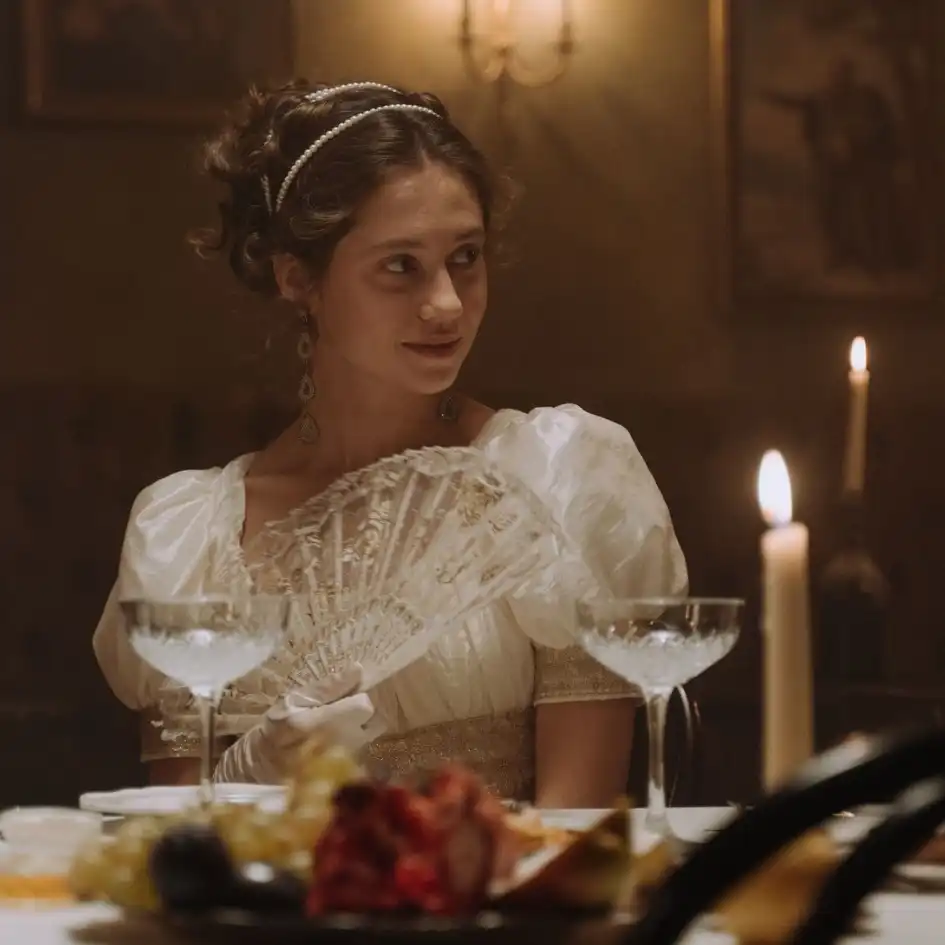
Jane Austen’s Emma follows Emma Woodhouse, a wealthy, confident young woman who decides she’s rather good at arranging other people’s romantic lives. Unfortunately, her matchmaking schemes tend to create confusion rather than happiness, while her own feelings are considerably less straightforward than she imagines.
The 2009 BBC adaptation stars Romola Garai as Emma and Jonny Lee Miller as Mr Knightley, with Michael Gambon among the supporting cast. It’s a charming, witty production full of social mishaps, romantic misunderstandings and the delicious awkwardness of people who are far better at judging everyone else than themselves. If you enjoy Austen’s sparkling dialogue, country-house settings and heroines who need to learn a little humility, it’s a lovely one to revisit.
And if none of these appeal then iPlayer still has all six series of Peaky Blinders and the 2025 Soho drama Dope Girls, both set in the years after the First World War. They are period dramas in the sense that everyone’s wearing a hat. Just don’t expect anyone to pour the tea.