

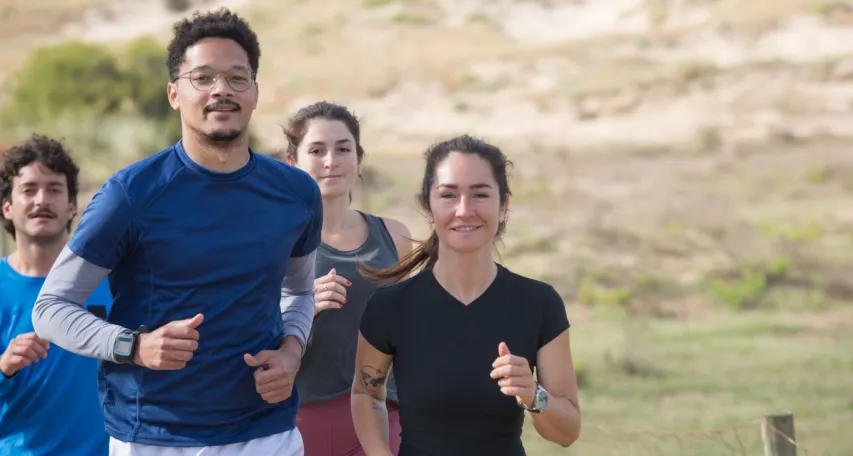
Here’s the thing about parkrun for beginners that the official pages are too polite to say outright. You can walk the whole thing. Nobody minds. Half the people in the car park have done exactly that at some point, and the volunteer at the back is there specifically so you’re never the last one out on the course. I’ve written this for the person who has been “meaning to try parkrun” for about three years.
I’m much more drawn to a languid walk along the river, ideally with a coffee and an almond croissant involved, than the idea of turning up to a timed 5k on a Saturday morning. That’s not a criticism of parkrun; I can see why having a regular event, familiar faces and a reason to get out of the house appeals to people. But I also think it’s worth acknowledging that not everyone who wants to be more active wants to join an organised event. If you’re curious about parkrun but feel a little intimidated by it, here’s what you should know before deciding whether it’s for you.
Let’s start with the basics.
How does parkrun work?
Parkrun is a free, timed 5k that happens every Saturday morning in parks all over the country (opens in new tab). It started at Bushy Park in south-west London by Paul Sinton-Hewitt (opens in new tab) on 2 October 2004, with 13 runners and three volunteers. It has since spread to hundreds of UK locations. Start times are 9am in England and Wales and 9.30am in Scotland.
Always look at your own event’s page before you set off, because the odd one does things differently. You register once on the parkrun website and get a personal barcode. Print it, put it on your phone, or buy one of those wristbands people swear by.
At the finish you’re handed a small token with your position on it, and a volunteer scans that alongside your barcode. No barcode, no time. You can still take part without one, but you’ll appear in the results as “unknown”, which feels a bit sad after you’ve dragged yourself out of bed. Your time usually lands in your inbox later that day.
There’s also junior parkrun, a 2k for children aged 4 to 14, held on Sunday mornings. Worth knowing if you have small people who need running about.
Can you walk parkrun?
Yes. Properly, officially yes. Parkrun has leaned into this in a big way. In October 2022 it introduced parkwalkers, volunteers in their own vests who walk the course and chat to anyone else walking it.
Research from the University of Stirling (opens in new tab), published in January 2026, looked at more than 31,000 participants at 68 Scottish events. Walker numbers rose by around 55% at events that took up the parkwalker idea fully, against 22% at events that didn’t.
Then there’s the tail walker. Every event has one, and their whole job is to be the last person over the line. So you won’t finish last. Read that again if it’s the thing stopping you.
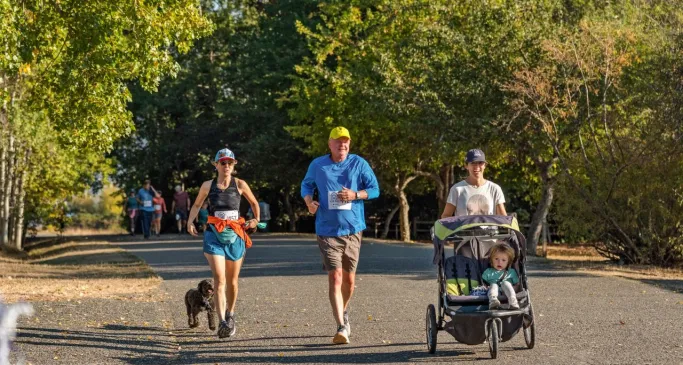
I think this is the bit that makes parkrun so good, and so easy to misjudge from the outside. The people in club vests sprinting off at the front are a small part of it. Plenty of the field is made up of people jogging, walking, pushing buggies or doing a slow shuffle while catching up with a friend.
Some events have course records and age categories, but in 2024 parkrun removed many of the record lists from its website, which tells you something about where its priorities are.
What to wear to your first parkrun
Get more from Lucy Loves Me
Beauty finds, film and TV picks and the trends worth your time, every week.
No spam. Unsubscribe any time.Wear whatever you’d go for a brisk walk in. Leggings or joggers, a T-shirt and a layer you can tie round your waist will do. Shoes matter most. Many courses go over grass, gravel or woodland paths, and in October that means mud. Trainers with a bit of grip are fine. You don’t need anything that cost three figures.
Dress for the standing about, too. A bit of a chill at the start is normal and is gone by the first kilometre, but the ten minutes before 9am can feel long in a damp park.
My advice would be not to spend a fortune preparing for something you haven’t tried yet. It’s easy to get caught up in the idea that you need specialist kit before you can start exercising, but the sensible approach is to use what you already have, provided it’s comfortable and suitable for the conditions. If you decide you enjoy parkrun and want to make it a regular Saturday habit, you can always invest in better kit later.
Easy things to forget:
Your barcode (yes, again)
A hair tie or a hat
Some change or a card for the café afterwards
Gloves from November onwards
What nobody tells you before your first one
Go to the first-timers’ briefing. Most events hold a short chat a few minutes before the start where a volunteer explains the course, which way the laps go and where the finish funnel is. It’s quick and friendly, and you’ll spot a few of the same faces on the way round.
Start near the back. The front of the pack goes off fast, and it’s demoralising to be overtaken by 200 people in the first minute. Standing towards the back means you set off with people moving at your sort of pace, and you’ll probably overtake a few on the way.
Laps can be confusing. Some courses loop two or three times, and it’s easy to lose count. Have a look at the course map on your event’s page so you know roughly what you’re in for.
Don’t stop at the line. Keep walking through the funnel before you check your watch, because there will be someone right behind you.
Take your token, find the scanners, and only then collapse dramatically onto the grass. You’ve earned it.
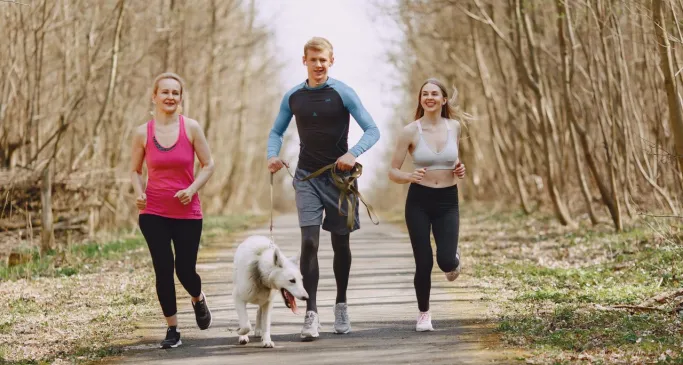
Dogs are allowed, one per person, on a short handheld lead. Since April 2022 parkrun hasn’t allowed dogs clipped to a waist belt, so leave the hands-free kit at home.
Then there’s the café. Most events have a regular spot where runners and volunteers go for a coffee afterwards, and it’s often the best part.
Volunteering counts too
Every event is run entirely by volunteers: marshals, timekeepers, barcode scanners, the tail walker and whoever does the run report. If you’re nervous about running, volunteering is a decent way to see how it all works without having to move faster than a stroll. It also gets recorded against your barcode. Lots of regulars volunteer every few weeks and run the rest, and nobody thinks less of a Saturday spent holding a stopwatch.
And if you want a gentle build-up first, the NHS Couch to 5K app is free and finishes with a 5k. Plenty of people use parkrun as their graduation run.
Is parkrun right for you if you’re not a runner?
I’d say parkrun is more worth it if you’re not a runner. Runners have clubs and races. Everyone else has fewer places where showing up and moving at your own speed is the whole point.
I think one of the biggest barriers to getting more active is the feeling that you have to do it in a particular way. You need the right trainers, a plan, a goal and, apparently, a Saturday morning alarm. For some people, having a regular event to turn up to is exactly the motivation they need. Others would rather get outside for a walk when they have the time and inclination. Neither approach is wrong. The important thing is finding something you can realistically see yourself sticking with.
Some GP surgeries are now registered as “parkrun practices (opens in new tab)” and point patients towards their local event, which says a lot about how it’s seen outside running circles.
Parkrun won’t appeal to everyone, and that’s fine. I’m much happier with the idea of heading out for a walk along the river than committing to a timed 5k, but I can see why the combination of fresh air, familiar faces and a regular Saturday routine works for so many people.
If you’ve been curious about parkrun but worried about being too slow, not being fit enough or feeling out of place, the practicalities are reassuring. You can walk, you don’t need expensive kit, and the event is designed to welcome people at different fitness levels.
Have a look at your local course, read the first-timer information and decide whether it sounds like something you’d enjoy. You don’t have to become a runner to get more active, and you don’t have to turn every hobby into a challenge. Sometimes a walk and a coffee are quite enough.
Read next
Vitamin D in the UK: when to take it, and what the NHS says about October to March